
C A R M A X
Home Office Title Management
Breaking News: The CBS (Central Business Support) team transformed a clunky title-tracking tool into a streamlined operation—and reduced stress for dozens of associates in the process.
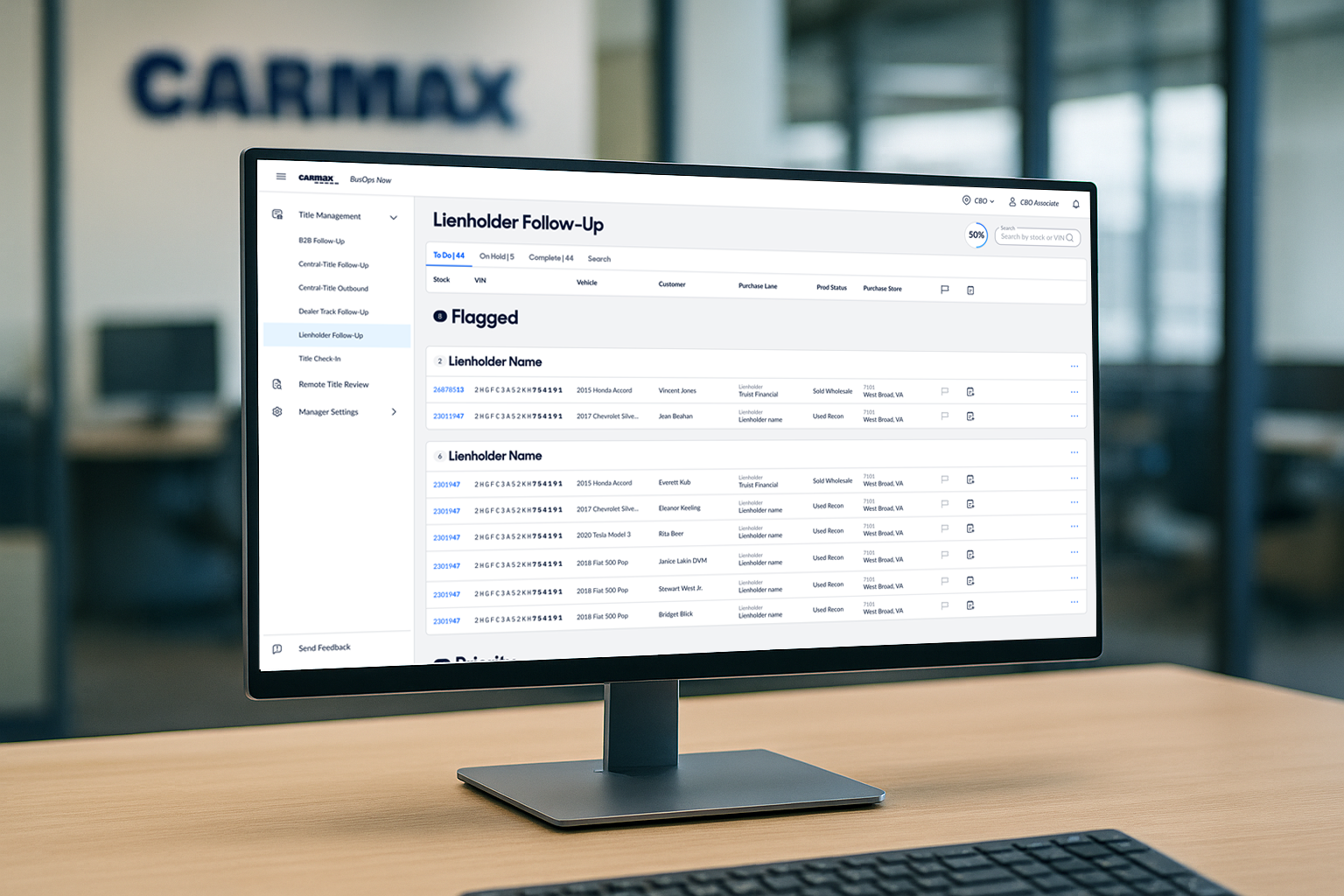
Before & After
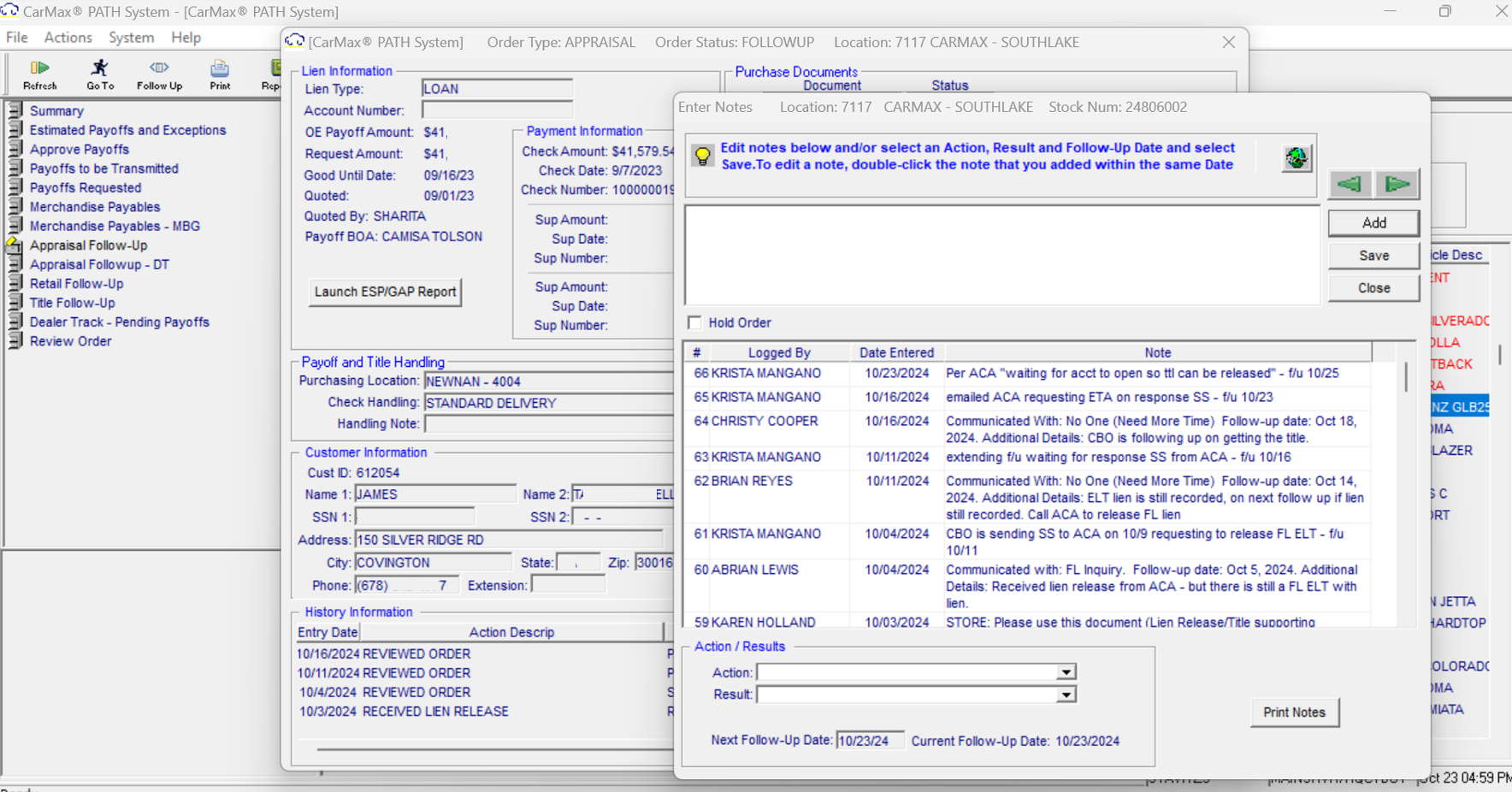
PATH
Title Handling

Role: Lead Designer | Central Business Support (CBS) team
Team Structure: Classic product team—Product Manager, front and back-end engineers, QE, analyst, field lead, and yours truly as the lone designer
Timeline: Sustaining product team (no fixed deadline, but plenty of leadership pressure)
The Problem: When 19 Bucks a Day Adds Up
Good evening. We're coming to you from CarMax headquarters, where a crisis was quietly mounting. Every day a vehicle sat without a clear title in CarMax's possession cost the company nineteen dollars. Multiply that across hundreds of vehicles, and you've got a story that demanded attention.
But the real story wasn't just about money—it was about the people trapped in a broken system.
Meet the Central Business Office associates. Every morning, they'd arrive to face the same ritual: export data from PATH (that's "Payoff and Title Handling" for those keeping score at home), download it into a spreadsheet, format it manually, and then—only then—could they start their actual work of tracking down vehicle titles from banks, auctions, and dealers.
PATH was a relic. A PowerBuilder application so old and rigid that associates couldn't even copy and paste. Each CarMax store had its own isolated version, meaning what one location knew was invisible to another. The system used generic dropdown options that told leadership almost nothing about what was actually happening with a title. And those spreadsheets? A daily maze of manual sorting with no real prioritization.
This is the story of how we replaced it.

The Investigation: Shadowing the Humans Behind the Data
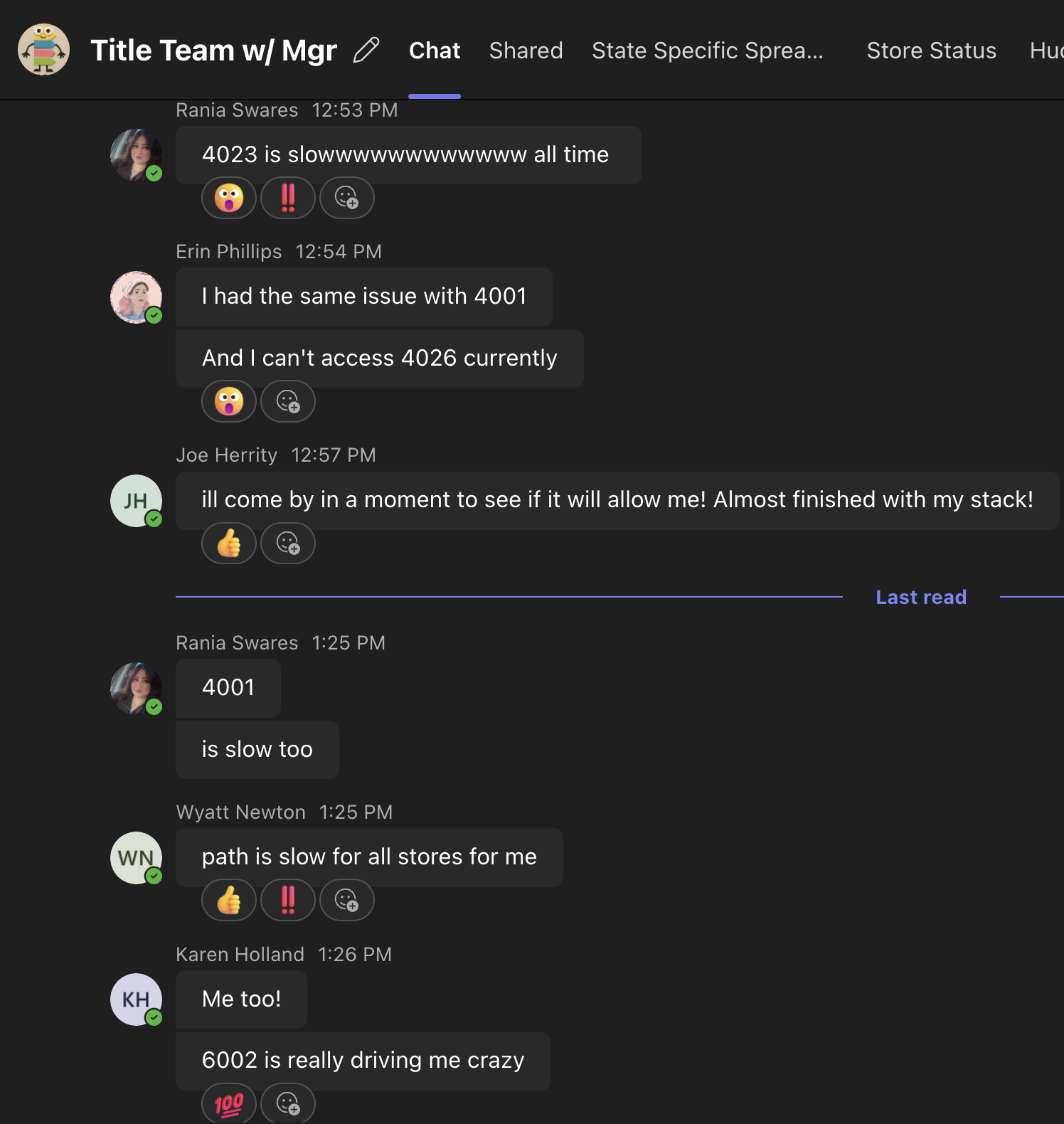
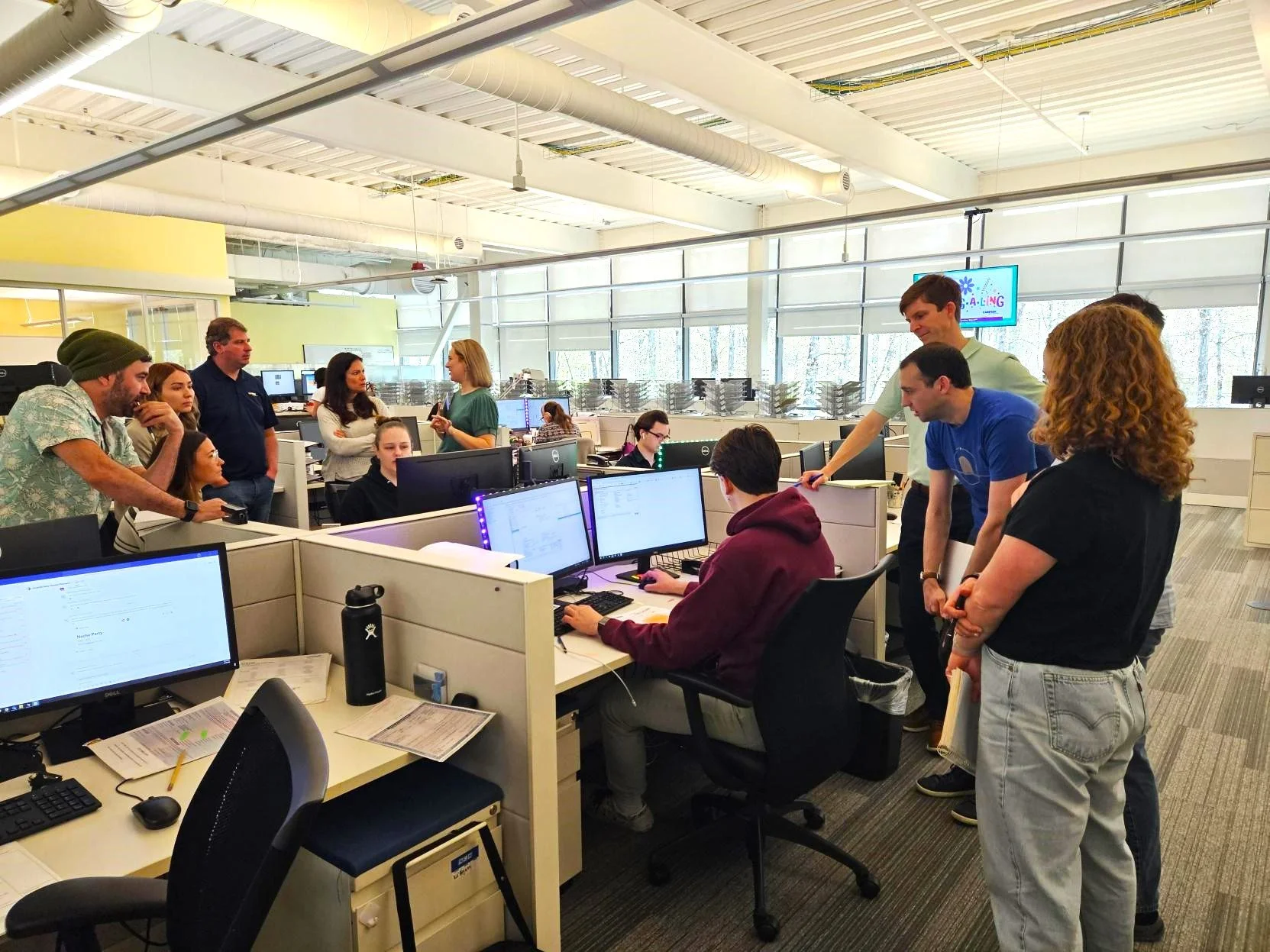
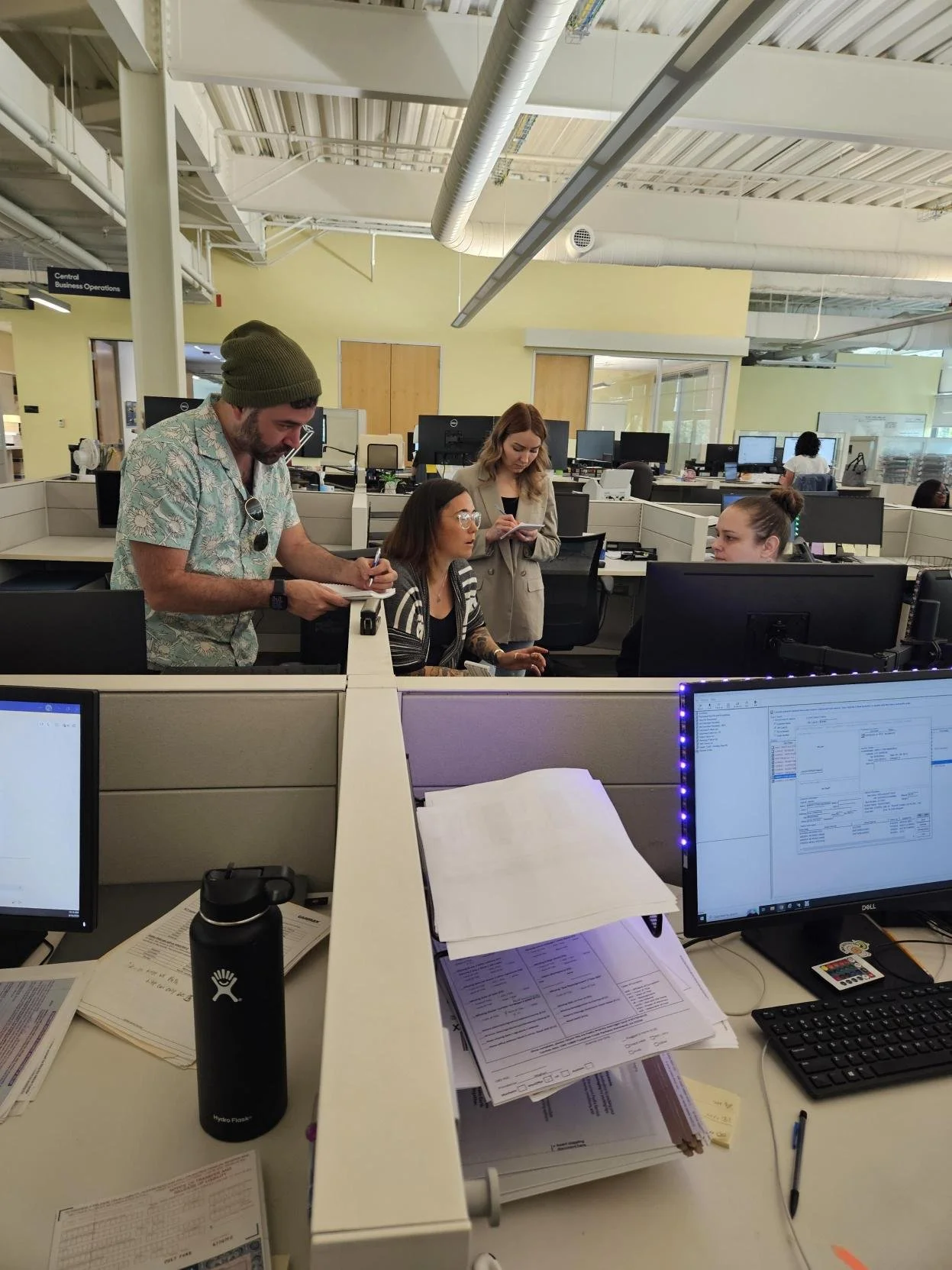
Our first move? We embedded ourselves with the people doing the work.
The full product team spent an entire day rotating through the Central Business Office, shadowing associates across three teams: Lienholder, Auction/Dealer, and Title Check-in. We watched them open mail. We watched them hunt for information across multiple systems. We documented their workarounds, their frustrations, their clever hacks.
Then we reconvened and compared notes. What problems kept appearing? What did a typical day actually look like? What were they wishing they could do?
We also dove into the data PATH had been collecting for years—every dropdown selection, every recorded action. We audited the old tool, mapped out user flows, and identified what was actually working (spoiler: not much).
Key insight: Associates were drowning in tools. They needed everything in one place, delivered in the right order, at the right time.
Surprising finding: Everyone had their own method. Their own way of working. And they were attached to it. This wasn't consumer-facing design where we aim for consensus across the widest audience. These were power users who were required to use the tool. Sometimes, what was best for CarMax didn't align with individual preferences. My job became helping associates see how certain decisions served the greater good—even when it meant changing comfortable habits.
The Approach: Designing Like We're Right, Testing Like We're Wrong
After shadowing, the entire product team grabbed paper and sketched. Engineers, QA, product manager, analyst—everyone. Each person brought unique insight into what this tool could become.
I gathered those sketches and began designing in Figma, using CarMax's Material UI design system and Associate Tool Framework. But I didn't disappear into a design cave. I met frequently with the Central Business Office team, iterating in real time, making small adjustments based on immediate feedback.
We also didn't wait for perfection. We launched early experiments—like a basic spreadsheet system that prioritized work—to learn fast and prove value quickly.
My guiding principle: Design like I'm right. Test like I'm wrong. Get feedback early and often.
The Queue Page
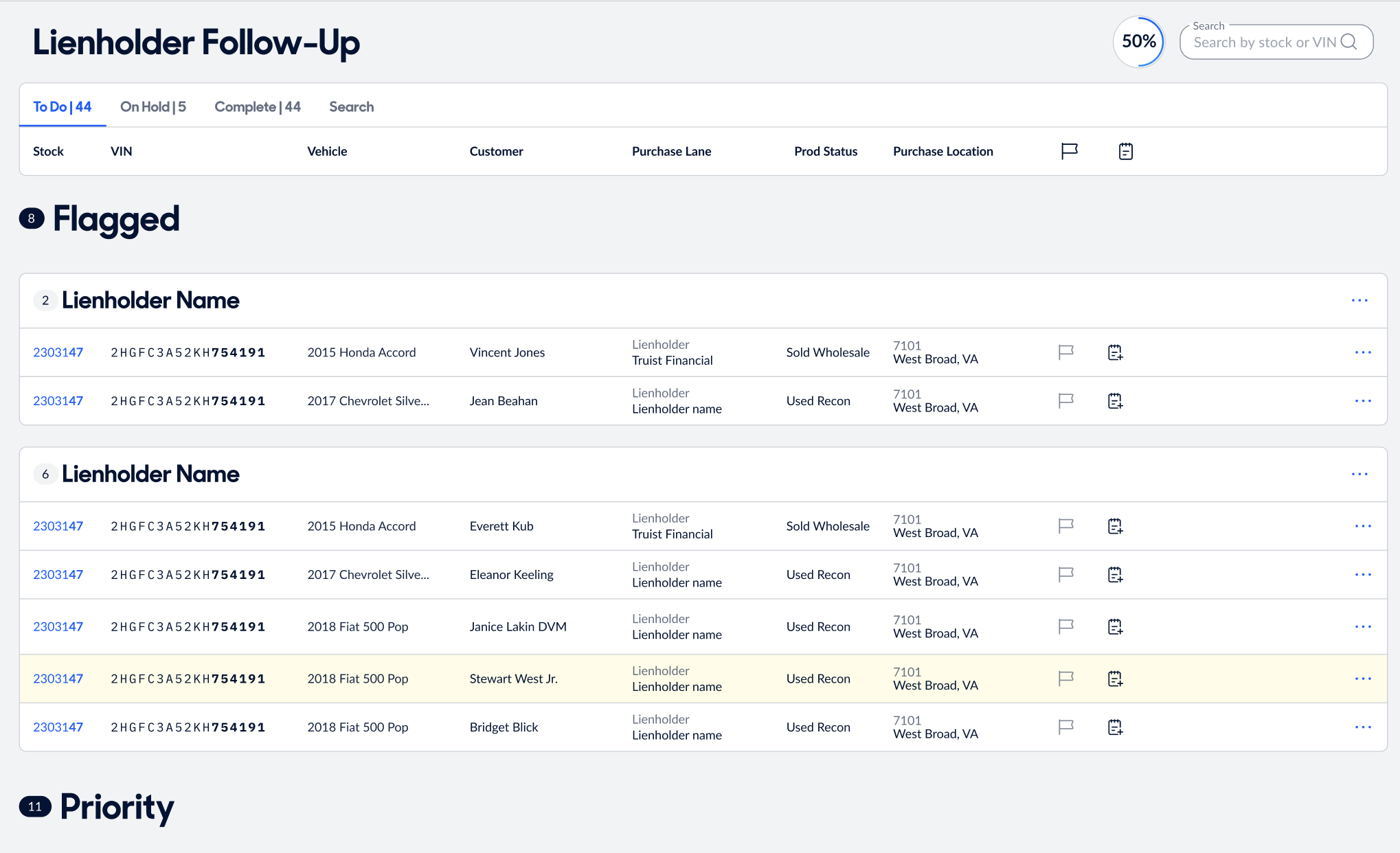
Think of this page as the associate's morning briefcase—packed with exactly what they need to work on, in exactly the right order.
No more exporting. No more manual sorting. Just a clean, prioritized table showing the day's title work.
One associate put it perfectly: "I love how neat and tidy my queue looks now. Takes a few days to get used to, but then it is great in taking the guesswork out of what records we should be working."
What We Built: Two Pages That Changed Everything
The Title Details Page
This is the main segment of the broadcast. The old PATH system scattered information across multiple records per store. Our new page consolidated everything into one responsive, real-time view: transfer history, lien details, check information, and every note from every location.
We also redesigned how associates recorded their work. Instead of forcing them into generic dropdowns, we let them capture what they were actually doing—emailing a bank, calling a DMV, correcting an address in a clear way. This gave leadership insight into problems with title and gave stores better visibility into the title acquisition progress.
Oh, and yes—you could finally copy and paste.
The Results: Working On Time Instead of 15 Days Behind
Quantitative evidence:
Associates went from working 15 days behind to on time
No-title days were reduced (saving CarMax $19 per car, per day)
Qualitative evidence:
"I have been less stressed by trying to do ALL the things and can focus on working what the queue is telling me to work. I don't want to ever look back."
The support from associates became our validation. They were working faster, feeling less overwhelmed, and finally understanding the impact of their work on CarMax's bottom line.
Looking forward & back
-
Looking back, I would've prioritized business requirements earlier in the process. The associates were vocal—really vocal—about what they wanted. But what they wanted didn't always align with what the business needed.
Here's what I learned: when you're building an internal tool for required use, sometimes the business perspective has to win. But that doesn't mean ignoring users. It means building trust, explaining the "why," and showing how changes serve everyone in the long run.
I also learned the power of quick wins. This team had never worked with a product team before. They didn't know we could help them. If I could do it again, I'd push for earlier small victories to build that trust faster.
-
This isn't the end of our broadcast. Our team continues to refine work prioritization in the queue. We're exploring automation opportunities—letting the system handle simple tasks so associates can focus on the work that requires human judgment and care.
The real breakthrough? Taking a broken legacy system and transforming it into something that not only works better, but shows associates their own value. Before, they didn't know if their follow-up work mattered. Now they see the impact every single day.
-
What makes this project worth sharing?
It's a slow, methodical overhaul of a legacy system with direct access to users. I'd never built a work-tracking product quite like this. But the fundamentals remain: bring things together cleanly, repair what's broken, and you improve lives.What I'm particularly proud of:
The little details. The quick changes. The trust we built with regular check-ins. Taking someone's workday and making it easier—making them see their value—that's the craft that matters.And with that, we'll head on to the next segment
Reporting from CarMax headquarters, where every day, we're making the work work better- this been a CBS News Special Report on the Title Management modernization project.